
Every year, as the Venice Film Festival prepares to welcome filmmakers from around the world to the Lido, a familiar conversation resurfaces with renewed urgency: how many women are directing the films that compete for the Golden Lion? The answer, more often than not, gives pause — and 2024 is no exception to that long-standing pattern.
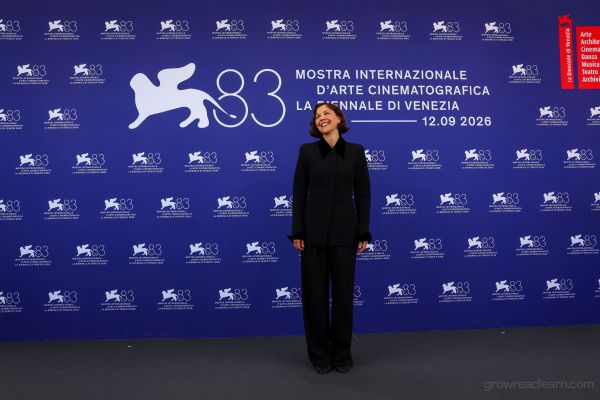
A Prestigious Stage With an Uneven Playing Field
Venice holds a singular place in the global film calendar. As one of the oldest and most influential film festivals in the world, its selections carry enormous weight — capable of launching Oscar campaigns, shaping critical discourse, and defining the cultural conversation around cinema for an entire year. That influence is precisely what makes the question of representation behind the camera so consequential.
When the lineup skews heavily toward male directors, it is not merely a statistical observation. It reflects — and arguably reinforces — the structural barriers that women continue to face across the film industry: unequal access to financing, institutional skepticism toward female-led projects, and a persistent tendency to view women’s stories as niche rather than universal.
Progress That Feels Incremental
To be fair, the festival has made visible efforts in recent years to elevate women’s work. Female directors have competed for and won its top prizes, and retrospective sections have increasingly honored overlooked female auteurs. Yet progress at Venice — as at Cannes and Berlin — tends to feel more cyclical than systemic. A strong year for women in competition is often followed by a regression, suggesting that inclusion remains a matter of individual programming choices rather than embedded institutional policy.
This inconsistency matters because festivals do not merely reflect the industry — they actively shape it. A film selected for Venice competition gains access to international distribution conversations, critical attention, and award-season momentum that can determine a director’s entire career trajectory. Exclusion from that ecosystem is not a neutral act.
The Broader Industry Context
The festival’s lineup exists within a wider landscape that remains challenging for women in film. Studies and advocacy organizations have repeatedly documented the underrepresentation of women in directing roles across major studio and independent productions alike. The problem is not a lack of talent or ambition — it is a set of gatekeeping mechanisms, often informal and unconscious, that consistently favor established male voices over emerging female ones.
Streaming platforms have, in some respects, opened new pathways. The reduced reliance on traditional theatrical financing has allowed a more diverse range of storytellers to find audiences. But the prestige circuit — the festival world that feeds the awards conversation — has been slower to transform.
What the Conversation Demands
Calling attention to gender imbalances at Venice is not about demanding quotas for their own sake. It is about asking a deeper question: what films are we not seeing because of who gets greenlit, who gets selected, and who gets championed by the institutions that matter most?
Advocates argue that the solution lies not in lowering standards but in widening the search — actively seeking out films directed by women across all regions, genres, and budget levels, and ensuring that the submission and selection process does not inadvertently replicate existing industry biases.
A Festival That Could Lead
Venice has the cultural authority to set a tone for the entire film season. When it consistently and visibly platforms women directors across all of its sections — not only in dedicated sidebars but in the main competition — it sends a signal to distributors, financiers, and fellow festivals about whose vision is considered worthy of the world’s attention.
The debate rekindled each September on the Lido is not simply about numbers on a spreadsheet. It is about the stories that shape how we understand our world, and the persistent, structural question of who gets to tell them. Until the answer becomes more consistently balanced, the conversation will — and should — continue.