
Lonnie Bunch, the Secretary of the Smithsonian Institution and one of the most consequential museum leaders in American history, has announced his retirement, bringing to a close a tenure that fundamentally altered how the nation’s largest museum complex engages with history, identity, and public life.
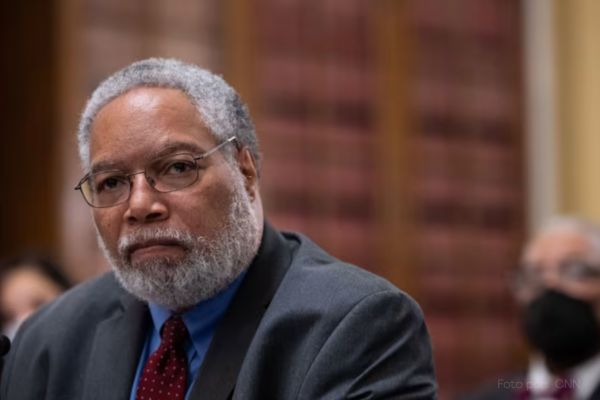
Bunch’s departure marks the end of an era defined by ambition, cultural reckoning, and an unwavering commitment to making history accessible to all Americans — not just those whose stories had traditionally occupied the center of the national narrative.
A Leader Who Redefined What Museums Can Do
Before ascending to the role of Smithsonian Secretary, Bunch served as the founding director of the National Museum of African American History and Culture (NMAAHC) in Washington, D.C. That project alone would have cemented his legacy. The museum, which opened to widespread acclaim, drew millions of visitors and sparked a broader national conversation about race, memory, and belonging in the United States.
His leadership style was marked by a belief that museums are not passive repositories of artifacts but active participants in shaping civic discourse. Under his stewardship, the Smithsonian embraced a more inclusive, community-centered approach to storytelling — one that acknowledged difficult truths about American history rather than smoothing them over.
Transformation at Scale
As Secretary of the entire Smithsonian Institution — an organization comprising nearly two dozen museums, galleries, research centers, and a zoo — Bunch oversaw efforts to diversify collections, modernize programming, and extend the institution’s reach beyond the National Mall. He championed initiatives aimed at reflecting the full breadth of American experience, including stories from Latino, Indigenous, Asian American, and other communities that have historically been underrepresented in mainstream cultural institutions.
His tenure also coincided with a period of intense national self-examination, particularly in the wake of renewed public debate over monuments, memorials, and the way history is taught and commemorated. Bunch navigated these conversations with a steady hand, positioning the Smithsonian as a thoughtful voice rather than a reactive one.
A Lasting Impact on Public History
Beyond bricks and mortar, Bunch’s influence will likely be felt in how the next generation of museum professionals and cultural leaders approaches their work. He demonstrated that institutions of extraordinary scale and prestige can still evolve — that they can challenge themselves to do better, reach further, and listen more carefully to the communities they serve.
His career stands as a reminder that public history is never neutral. Every curatorial choice, every exhibition design, every acquisition decision carries meaning. Bunch made those choices with intention and with a clear moral framework grounded in equity and truth.
What Comes Next
The Smithsonian will now face the considerable challenge of identifying a successor capable of sustaining the momentum Bunch built while charting a course through an increasingly complex cultural and political landscape. Whoever steps into the role will inherit an institution that has been stretched — in the best possible sense — beyond what many thought possible.
For Bunch, retirement likely signals not an exit from public life but a transition. His voice, shaped by decades of scholarship and leadership, remains one of the most thoughtful in American cultural discourse.
As the Smithsonian prepares for its next chapter, the institution — and the country — owes Lonnie Bunch a debt of gratitude for proving that history, honestly told, has the power to unite as much as it illuminates.