
Most people understand that saving money is important. Far fewer, however, truly grasp the mechanism that makes patient saving so remarkably effective over time. Compound interest — often described as earning interest on your interest — is one of the foundational principles of personal finance, and understanding it can fundamentally change how you approach your financial life.
What Is Compound Interest, Exactly?
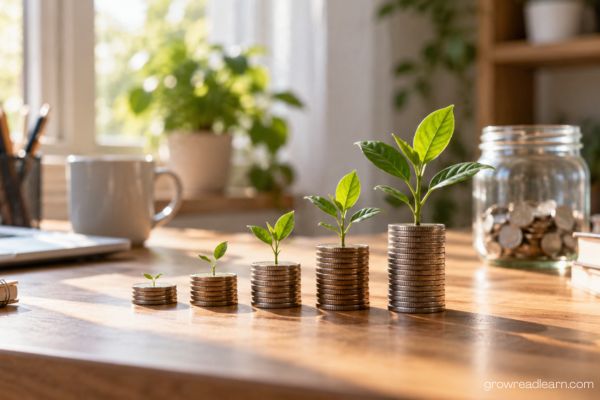
At its core, compound interest means that the returns you earn on your savings or investments are added back to your principal. From that point forward, you earn returns not just on the original amount, but on the accumulated total. This creates a self-reinforcing cycle that accelerates growth the longer it continues.
Compare this to simple interest, where you only ever earn returns on the original principal. With simple interest, growth is linear. With compound interest, growth becomes exponential — and that distinction is enormous over a long enough time horizon.
Why Time Is the Most Critical Variable
The single most important factor in compounding is time. The earlier you begin saving or investing, the more cycles of compounding your money can experience. Even modest contributions made consistently over many years can grow into substantial sums, while larger contributions started much later may never fully catch up.
This is why financial educators consistently emphasize starting early, even if the amounts seem small. Waiting even a few years to begin can meaningfully reduce the final outcome, because those early years are the ones that set the compounding cycle in motion.
How Frequency Affects Your Returns
Compounding does not always happen on the same schedule. Interest can compound annually, quarterly, monthly, or even daily, depending on the financial product. The more frequently compounding occurs, the faster your balance grows. When comparing savings accounts, investment vehicles, or loan products, it is worth paying close attention to how often interest is calculated and applied.
Where Compound Interest Works For You — and Against You
Compounding is a powerful ally when it applies to your savings and investments. In a retirement account, a diversified investment portfolio, or even a high-yield savings account, compound growth steadily builds your wealth in the background.
However, the same principle works against you when it comes to debt. Credit card balances, personal loans, and other forms of consumer debt often compound at high rates. If you carry a balance, the interest owed grows on top of itself just as investment returns do — but in reverse, working to erode your financial position rather than strengthen it. This is why paying off high-interest debt is generally considered one of the best financial moves a person can make.
Practical Ways to Put Compounding to Work
- Start as early as possible. Even small, regular contributions benefit enormously from a long time horizon.
- Reinvest your returns. Whether it’s dividends, interest payments, or capital gains, allowing returns to remain invested keeps the compounding cycle intact.
- Be consistent. Regular contributions — weekly, monthly, or with each paycheck — add fuel to the compounding engine over time.
- Minimize unnecessary withdrawals. Every time you pull money out, you interrupt the compounding process and reduce the base on which future growth is calculated.
- Keep fees low. Investment fees and account charges quietly erode your compounding gains. Choosing low-cost options preserves more of your returns.
A Principle Worth Internalizing
Compound interest rewards patience, consistency, and an early start. It does not require extraordinary income or a background in finance. What it does require is time and the discipline to let your money work without interruption. Once you truly understand how compounding functions, the logic behind long-term investing becomes not just clear, but compelling.
In a world that often prioritizes instant results, compound interest is a reminder that some of the most significant outcomes are built quietly, one period at a time.